Guides · Safety and workspace
Best nitrile gloves and safety kit for resin printing
Build a resin-printing safety kit around the current SDS: suitable nitrile gloves, chemical splash eye protection, containment, tools and labelled waste—not a generic bundle.
This page contains Amazon affiliate links. As an Amazon Associate we earn from qualifying purchases. Prices and availability can change; check the exact listing before buying.
We haven't tested these products. This comparison is based on makers' published specifications and manuals, retailer listings and owner reviews (checked 15 November 2026).
The best safety kit is not a fixed shopping list. It is the set of controls required by the exact resin and cleaning liquid, fitted to the user and supported by a contained workspace. Start with elimination and enclosure, then select personal protective equipment from the safety data sheets. Gloves and goggles are the last barrier, not a substitute for ventilation and good handling.
The Amazon UK listings linked below were title-checked on 15 November 2026. They are starting points for checking current products, not proof of chemical compatibility. Buy from a reputable safety supplier and check the product declaration, size, intended use and current conformity information against the exact resin and solvent SDS.
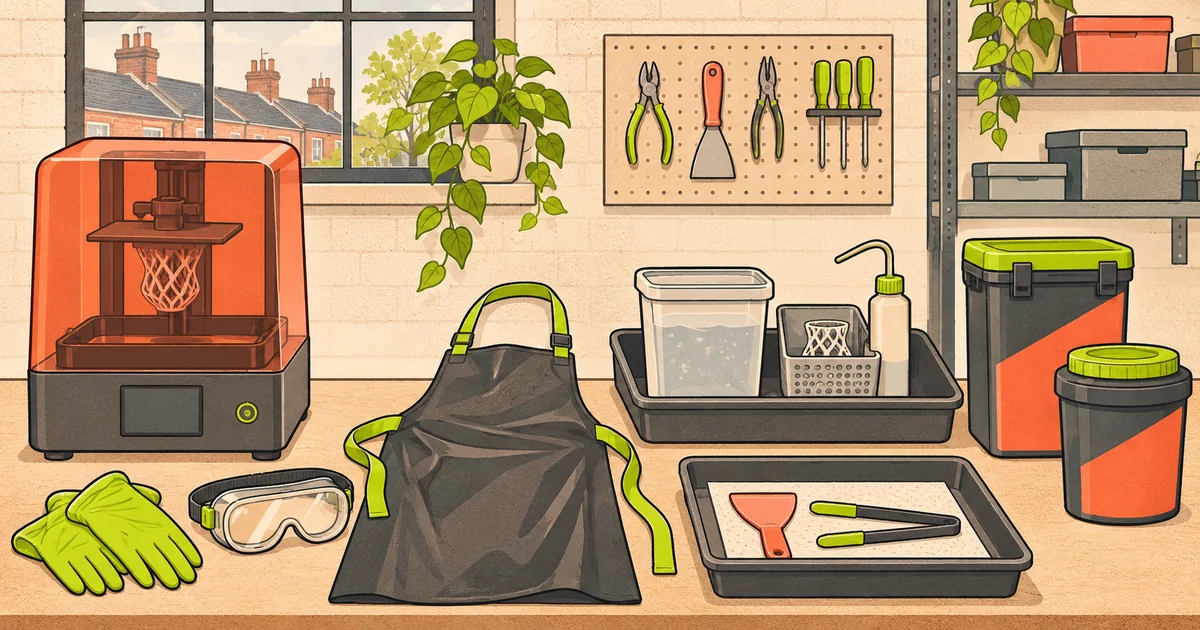
Baseline kit
| Item | What to look for | What it does not solve |
|---|---|---|
| Disposable nitrile gloves | Correct size; chemical compatibility and change frequency based on SDS/supplier data | Vapour, splashes to face, contaminated door handles |
| Chemical splash goggles | Indirectly vented or sealed style intended for liquid splash; comfortable fit | Airborne exposure or face/neck splashes |
| Protective clothing | Long sleeves or apron that stays in the work zone and can be cleaned or discarded appropriately | Poor handling technique |
| Containment trays | Raised lip, resin-compatible surface, sized for vat and bottle | A spill larger than the tray |
| Closed wash containers | Compatible with liquid, stable, labelled and sealable | Disposal of spent liquid |
| Tools | Dedicated scraper, cutters, tweezers, funnel and wipes | Skin protection when tools are dirty |
| Waste containers | Compatible, closed, labelled containers for liquid and contaminated solids | Permission to use a household waste route |
Nitrile gloves: fit and compatibility first
Elegoo's water-washable resin SDS says to use protective gloves and includes glove-material information in its exposure-control section. The exact glove selection should follow the exact resin and solvent SDS plus the glove maker's chemical-resistance data. “Nitrile” is a material family, not a universal breakthrough-time promise; thickness, formulation and the chemical mixture matter.
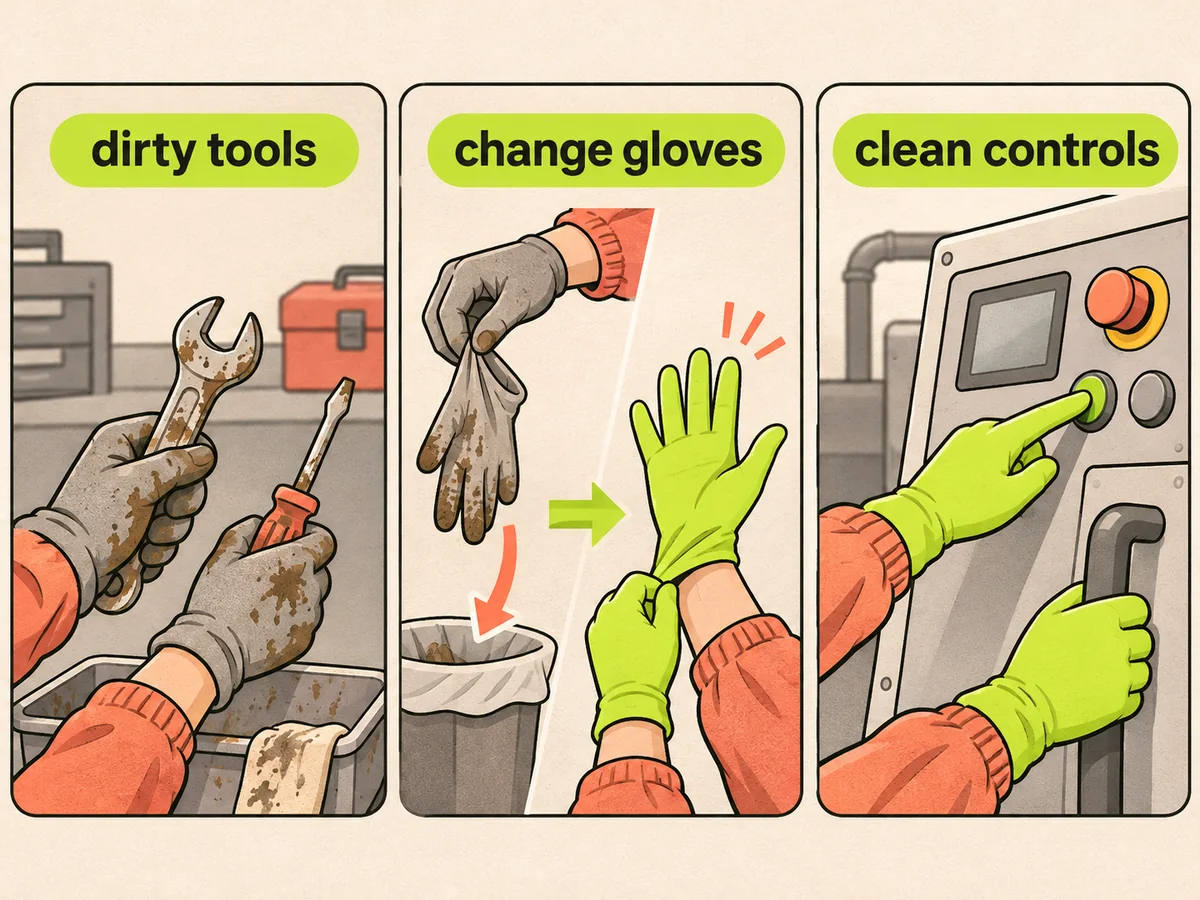
Choose a size that lets you grip a wet build plate without excess fingertip material. Too-tight gloves are stressed and uncomfortable; loose gloves snag and reduce control. Keep several sizes if more than one person uses the station. Inspect before use and change immediately after a tear, visible contamination inside, or a task transition that would spread resin to a clean surface.
Double-gloving can make controlled removal easier for a particularly dirty transfer, but it does not justify longer wear. Never wash disposable gloves for reuse unless the manufacturer explicitly designed them for that. Remove them without touching bare skin with the contaminated exterior, wash hands with soap and water, and keep phones and keyboards outside the dirty zone.
Latex allergy is another reason not to treat any box of disposable gloves as interchangeable. HSE's skin-exposure guidance emphasises preventing or controlling contact at source. A tool that holds a part securely and a drip tray that catches resin may reduce contact more reliably than simply adding another glove.
Eye and face protection
The Elegoo SDS classifies the water-washable mixture as causing serious eye damage. Select chemical splash goggles suitable for liquid work, not ordinary spectacles or open-sided impact glasses. A face shield can add face coverage for a splash-prone transfer but normally complements, rather than replaces, appropriate goggles. Check the PPE maker's intended use and current conformity information.
Fit matters. Goggle seals must work with your face and any prescription spectacles. Anti-fog performance and comfort affect whether protection stays in place. Keep eye protection inside or immediately beside the controlled zone, protected from contamination when stored. Replace scratched lenses and clean only by the maker's instructions.
If the product enters an eye or contacts skin, follow the exact SDS first-aid instructions. Do not improvise with IPA on skin. Elegoo's sheet calls for immediate medical attention in its general first-aid description and gives specific eye-rinse instructions; keep the document accessible rather than relying on memory.
Clothing and the work surface
Use clothing that covers exposed skin and remains in the resin area. A chemical-resistant apron may protect ordinary clothes during vat pouring and plate removal. Avoid absorbent sleeves dangling over the vat. Contaminated clothing needs handling according to the SDS; do not carry it through the home or mix it casually with family laundry.
A large lipped tray under pouring, scraping and transfer operations localises drips. Silicone mats are popular, but compatibility and cleaning still matter; a flexible mat covered in cured shards can become a puncture and contamination source. Disposable absorbent liners can capture drips but become contaminated waste. The best surface is smooth, stable, light enough to inspect and replaceable if damaged.
Dedicated tools
Use separate tools for the dirty stage and the finished stage. A metal scraper at the build plate, flush cutters for supports, tweezers and a funnel should not return to household use. Blades and pointed supports add mechanical injury to the chemical exposure. Cut away from the body and use a container that catches fragments.
Paper towel can spread a spill and create a larger contaminated solid. Keep the resin SDS spill method available and stock the absorbent material it names. Do not create aerosols by spraying resin-contaminated surfaces. HSE advises considering every exposure route and using containment or local extraction as appropriate.
Ventilation and respiratory protection
A disposable dust mask is not a vapour control. Respirator selection, where the SDS and risk assessment require one, depends on contaminant, concentration, filter, face fit, change schedule and training. Buying an unverified mask from a marketplace can create false confidence. Prioritise source containment and designed exhaust; seek competent occupational-hygiene advice if the process cannot be controlled.
The home user should not translate a workplace cartridge code into a casual purchase without checking the exact chemical and fit. Facial hair can prevent a tight-fitting respirator seal. Filters have storage and replacement requirements. The ventilation guide explains why a carbon puck inside a cover is not the same as room control.
Waste and emergency items
Keep compatible, sealable containers for spent wash liquid and failed liquid resin, plus a separate closed container for contaminated solids. Label contents and date. Do not use food or drink containers. Keep the local waste-service instructions with the containers and transport only in a stable secondary tray.
Maintain clear access to soap and water without crossing a food area. An eyewash provision should match the SDS and be maintained; a dusty bottle at the back of a shelf is not a plan. Keep emergency numbers and the SDS accessible to another person. Prevent access by children and pets, and lock the chemical storage if needed.
Buying checklist
- Read the resin and solvent SDS sections for exposure controls, first aid, storage and disposal.
- Ask the glove supplier for compatibility data for the named chemicals.
- Fit-test goggles for seal, vision and comfort; check their intended splash protection.
- Size trays for the largest bottle, vat and wash-container transfer.
- Label every wash and waste container before the first pour.
- Separate clean controls, door handles and electronics from gloved hands.
- Reassess when the resin, solvent or process changes.
Sources
- HSE COSHH questions and safety data sheets — official guidance, accessed 15 November 2026.
- HSE COSHH risk assessment — official guidance, accessed 15 November 2026.
- HSE managing skin exposure — official guidance, accessed 15 November 2026.
- Elegoo Water Washable Photopolymer Resin SDS — safety data sheet, accessed 15 November 2026.
Check current Amazon UK listings
These neutral links are places to check current availability, not extra recommendations. Confirm the exact model, size, colour, compatibility and current price on the listing. Product titles were checked 15 November 2026; sale prices change.
- Ansell AlphaTec 37-185 Chemical-Resistant Nitrile Gloves, Liquid and Splash Protection, Food-Handling, Silicone and Latex-Free Work Glove, Waterproof, Reusable, Green, Size L (1 Pair)
- Ansell AlphaTec 37-310 Nitrile Cleaning Gloves, Blue, Size M, 12 Pairs
- NoCry Safety Goggles Over Glasses. Anti Fog and Scratch Resistant Clear Coating. Vented Panoramic Lenses. Airsoft Goggles that Fit Over Safety Glasses. Protective Goggles for Welding, Work and Lab
Read next
Plan a separate, contained resin workspace around the exact SDS, source control, outdoor exhaust, skin and eye protection, spill response and local waste routes.
Printing and post-processingWashing and curing resin prints without losing control of wasteA step-by-step post-processing workflow for draining, two-stage washing, support removal, drying, UV post-cure and segregating contaminated liquids and solids.